
America First
January 6, 2026
Venezuela now. Is Greenland or Iran next?
We weren’t more than a couple of days into the New Year before facing the first major challenge of 2026. The Americans invaded Venezuela, kidnapped President Maduro and his wife and declared the country to be under American control until further notice. Most people could hardly believe their own eyes. What was this all about?
President Trump, in his usual nonchalant fashion, declared it a war against the drug lords. Although that is a very opportune side effect, in our opinion, this is really about oil. Venezuela’s oil reserves, which have been starved of investment for decades, are massive, even bigger than those of Saudi Arabia. Taking control of those reserves will allow Trump to go after the Iranian leadership without running the risk of oil prices going to $200 per barrel, although we are mindful that it will take some time for any material increase in Venezuelan oil production to come on line
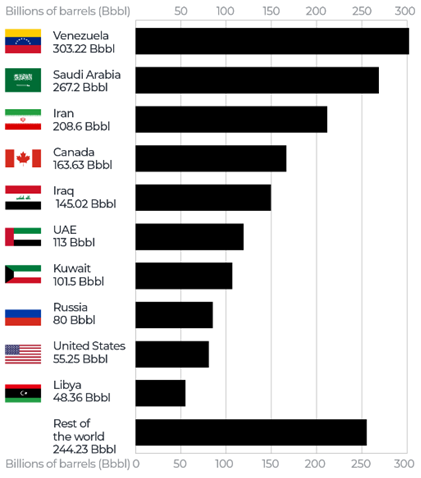
Trump’s desire to destroy Tehran should be analysed in the context of his close relationship with Benjamin Netanyahu, Prime Minister of Israel. If the latter can convince the former that Iran is an existential threat to Israel, it is only a question of time before the Americans will strike, we believe. That could, quite possibly, happen later this year.
Greenland could prove a minor ‘distraction’ for Trump, though. Just like he is doing his best to convince everybody that Venezuela is about drugs, he has repeatedly stated that Greenland is about national security, which we believe is false. Greenland is about access to valuable minerals, in this case, not oil but minerals that are critical for the US technology industry, for example rare earths.
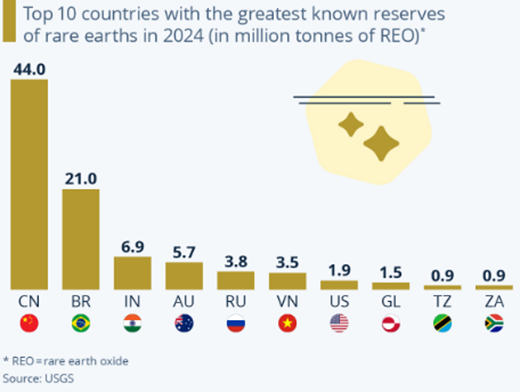
The Americans are desperately short of many of those minerals that are important to the American growth story. So far, the domestic shortage has been addressed through imports, but various fallouts, particularly between Beijing and Washington DC, has tempted Trump to aim for the other nearby solution, namely annexation. The fact that the United States of America, in less than a year, has managed to turn itself into one of the world’s biggest bullies, doesn’t seem to bother him.
What does all of this mean, both geopolitically and to financial markets?
Geopolitically, Trump has essentially approved the use of tools which are, as per international law, illegal. Adding to that, should he also decide to go after Greenland, then NATO is finished (if it isn’t already). In practice, this means that international leaders like Putin and Xi now have carte blanche to do whatever they feel like, in Taiwan or elsewhere. Therefore, you should expect geopolitics to move up a few nods on the risk scale.
Oil and gold are the two assets most directly affected by current events. Oil dipped initially, but modest losses turned into (even more) modest gains, as Brent started trading Monday morning. It is probably fair to say that markets are bewildered. On one hand, this could result in much higher supplies, which effectively means lower prices. On the other hand, growing tensions usually result in higher prices. If the Americans and the Israelis want regime change in Iran then we think that oil prices are likely to rise in the coming months.
Gold is the world’s primary defensive asset. When investor anxiety is on the rise, the price of gold almost always goes up. As these lines are written, since last Friday, the gold price is up nearly 2%. Recently we have held numerous roundtables over the same topic: is it time to walk away from gold? Trump has effectively answered that question, and the answer is an emphatic “NO”. The American moves in Venezuela combined with the rhetoric coming from various US government leaders make it quite likely that Greenland or Iran (or somebody else) will be next on the Americans’ list and, for that reason, we have decided to hold on to gold despite recent rallies.
What does it mean for clients’ portfolios?
The impact on clients’ portfolios has been minimal. We have little exposure to South American and Middle Eastern financial markets and continue to hold significant exposure to commodities, including gold, which should provide some immunity from geopolitical risk.
We continue to monitor developments and should things escalate we are prepared to increase our exposure to defensive assets in portfolios.
Risk Warning
This document has been issued by Quartet Capital Partners LLP (“Quartet”), which is authorised and regulated by the Financial Conduct Authority. The information in this document does not constitute, or form part of, any offer to sell or issue, or any offer to purchase or subscribe for shares, nor shall this document or any part of it or the fact of its distribution form the basis of or be relied on in connection with any contract. Quartet has not taken any steps to ensure that the securities referred to in this document are suitable for any particular investor and no assurance can be given that the stated investment objectives will be achieved. Quartet may, to the extent permitted by law, act upon or use the information or opinions presented herein, or the research or analysis on which it is based, before the material is published. Past performance is not a guide to future performance.
The law may restrict distribution of this document in certain jurisdictions; therefore, persons into whose possession this document comes should inform themselves about and observe any such restrictions. This letter, the information contained herein, and any oral or other written information disclosed or provided is strictly confidential and may not be reproduced or redistributed, in whole or in part, nor may its contents be disclosed to any other person under any circumstances.
Quartet Capital Partners LLP is a Limited Liability Partnership registered in England and Wales, Company No: OC345770.
Registered Office: 16 Water Lane, Richmond, Surrey, TW9 1TJ.
Authorised and regulated by the Financial Conduct Authority of the United Kingdom (“FCA”).
A list of members is available for inspection at the registered office.
More insights
The Road to Victory
March 27, 2026